 It’s always very gratifying to hear from readers that they enjoyed or connected with some of my writing. One piece that was particularly well received dealt with my anxiety at the shuttering of a journal that had published some of my psychology work.
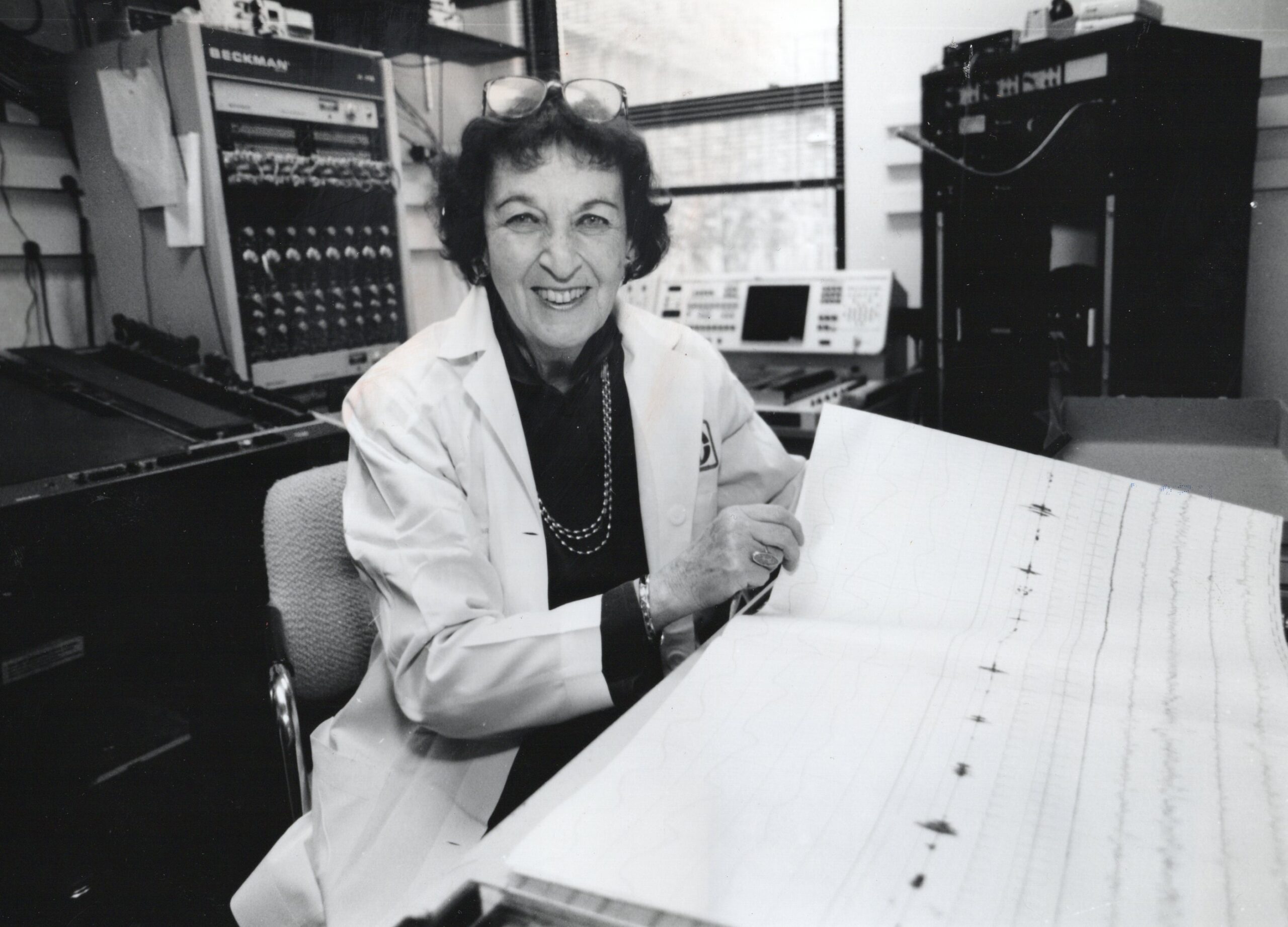
I suspect readers connected as much with my academic ennui as they did with the opportunity to get to know my long-time mentor and friend, Professor Rosalind Dymond Cartwright. I’ve written about Roz several times before. Based on some feedback, having a mentor is not necessarily a common experience, and I count myself fortunate to have had a few in my life.
It’s staggering to realise how quickly time has passed since I wrote that piece in early 2021. Given its positive reception, I wanted to provide an update on Professor Cartwright.
I’m sorry to say that Roz passed away on the 15th of January 2021, at the age of 98. We last spoke about a week before she died, when I called to wish her a belated happy birthday.
I was grateful to be among those interviewed for Roz’s obituary by journalist Maureen O’Donnell of the Chicago Sun-Times. As I said in that article, Roz’s work changed my way of thinking about empathy, a topic I have researched for many years, and one which she studied in the ‘40s and ‘50s.
Empathy is how we first connected when I wrote her in the early 2000s. Roz sent me some yellowed offprints of some of her early articles. They are very special to me. I was also quoted by Maureen as saying that Roz’s work changed my life. This was not hyperbole. Reading her work on the topic early in my doctoral studies excited me, to be sure. More than that, her work was a conduit to get to know a very special lady who taught me – sometimes quite directly through advice and other times just in the way she had forged a career in research – a lot about life.
We ended that final call with Roz reminding me that she was always ready to welcome visitors to her apartment on Lake Shore Drive in Chicago. I was last there 10 years earlier, and we spent an afternoon over wine and cheese discussing empathy, sleep, marriages, grief, and other things. You know, mentor stuff.
After her work on empathy and social perception – her PhD dissertation was supervised by sociologist Professor Leonard Cottrell, whom Roz described to me as “a distinguished Southern gentleman” – as well as several years examining the outcomes of psychotherapy with Professor Carl Rogers, she committed herself to understanding night life. Over the ensuring decades, Roz’s work on sleep and dreams included research, teaching, clinical work, being an expert witness in several court cases, and science communication.
Roz’s program of research examined the role of dreams in working through the emotions of our waking life experiences and shaping how we think about ourselves. What Roz found, and which was most fully described in her 2010 (final) book The Twenty-Four Hour Mind, where she presents her model of the “wake-sleep collaboration” or 24-hour mind, was that dreams have a role to play in moving us forward, sometimes when we might be significantly stuck in troublesome life experiences. That dreams often draw on and meld old and new images and experiences is not haphazard. Instead, they allow an integration of our past and present selves; they help us clarify “who I am and what is good for me and what is not”.
Several of her studies examined the experiences of participants in the process of divorce. Volunteers would spend periods of time in her sleep lab, being woken up during the REM phase to report on the content and emotional valence of their dreams. Research assistants blinded to the backgrounds of participants – such as some participants having met diagnostic criteria for depression – coded dream transcripts using empirical methods. Participants returned to the lab, sometimes months later, and it was found that their recovery and adjustment to post-divorce life was often correlated with the nature of their earlier dream experiences. Other studies examined how waking concerns might influence dreaming, and how the nature of dreams changed over the night cycle and impacted mood the next morning.
I think that Roz’s approach was uniquely positioned through her experiences in social psychology, sociology, client-centred psychotherapy, and sleep medicine. As one friend described, her earlier work in psychotherapy likely influenced her ideas around emotional regulation and recovery from and integration of trauma experiences. While scientists are often reluctant to admit that their own concerns might have borne a research interest, Roz reflected on how her own divorce had spurred an interest in the night life of uncoupling. What made her a great scientist, and a great clinician, was that introspection was coupled with robust research. Not surprisingly, she’d written about the relation of insight to empathy back in 1948 – one of my favourite papers.
Amongst the decades of science and practice discussed in her book, Roz shared one of her own recurring dream characters as an example of the symbols and emotional content of our nighttime processing. Reading about this dream got me to thinking about (and eventually sharing with Roz) a dream that I had had, and to consider it from a self-concept perspective.
After being passed over for interview for a job at the university where I had undertaken my PhD, I dreamt I was facing a similar rejection. However, in the dream, I was back at one of my first jobs at a supermarket! I loved that job, felt I was good at it, and had difficulty leaving it to start my PhD. I interpreted the connection to come from the challenge the university rejection presented to my self-concept of being a good worker, which is something that is still very central to my thinking (for better, and for worse), having a good reputation, as well as my need to finally sever a tie to that institution and commit to the future. By the way, I still pack a grocery bag with the best of them.
Well, what was Roz’s recurring dream character? He was a harlequin figure. One of these dreams occurred after a conference symposium she proposed was not accepted for inclusion in the conference program. In the dream, the harlequin was an assistant-type character giving awards on stage. When it came time for Roz’s award, the harlequin used the opportunity to make fun, downplay, and essentially exclude her from the (boy’s) club.
The harlequin had played a part in Roz’s dreams since the time she was about six or seven years of age. As she wrote, “The harlequin figure survives as a dream character many decades after his debut”. Talk about a returning day (or night) player! In his first incarnation, he was a man, robber, at the door to the family home. Roz ran and hid from him then. On reflection, he represented a range of things: danger stemming from the unknown, vulnerability, and isolation. But he also offered hints of alternatives for the future, not yet known to a young child, such as one day being able to outsmart deceptive characters and that facing challenges and committing to a sometimes-difficult path could be rewarding.
For Roz, the conference harlequin’s appearance stemmed from the symposium experience because it “threatened a core characteristic of my self-concept—’I am a good sleep researcher who goes her own way’”. Why did he keep appearing? As she reflected, “He is part of a network of older memories of challenges to a central self-definition: I am a smart little girl who figures things out for herself”. As an academic, the continuity of this core concern doesn’t totally surprise me. Dreams or daytime concerns about my value and worth, in and out of academia, have a long history. I was, however, humbled by reading Roz’s recollections as a scientist, as a woman, and as a woman scientist across her eight decades of professional work.
Well, what became of the harlequin? In a tremendous tribute published in the New York Times as part of their “The Lives They Lived” segment, Roz was profiled as one of the innovators we lost in 2021. Not surprisingly, her work on the recurring dreams of people such as those going through divorce was profiled. I didn’t, however, expect to read about a resolution to the harlequin dream, of which I was not aware.
As the writer describes, a month before she died, Roz told her grandson that she had again dreamed of the harlequin. This time he was in an auditorium where she was giving a research presentation to a room full of peers. While she felt a sense of dread, she had to keep lecturing. On the completion of her talk and a standing ovation, Roz was surprised to find that…the harlequin was gone.
As her grandson said, “He caused no trouble, no harm, he just listened. He had chosen to sit and be at peace, and therefore she could sit and be at peace”.
I am glad that Roz and her troublesome harlequin could at long last find a truce. Before her last book went to press, she pondered to me whether it was “a bit of an
arrogancy” to take on the models of old – notably Freud’s – in her own formulation of the 24-hour mind. She then added, “But what the heck; now that I am emeritus, I
can do as I please and was forever a follower of my own path through the
jungle of competing ideas”.
She signed off, “I will be happy to see where your path leads you”.
May we all have the courage of our convictions, even when self-doubt from within and without is a part of our paths.
Top photograph of Roz in 1991 by Nancy Stuenkel for Chicago Sun-Times.