Have you ever written a fan letter as an adult? With social media, it’s certainly much easier to reach out to someone in the public eye and send them a quick message. But I’m talking about the older tradition of writing by hand (or typing) an actual letter and then posting it, and perhaps awaiting a reply.
For the last 10 years or so, I’ve been seeking out the contact details of people whose work I’ve admired, writing them a letter or card.
I’ve largely focused my letter writing on those whom I was a fan of as a young person. I have wondered why I choose to focus on these people. In some ways, it’s probably down to this blog. I started it in 2013 and decided that I wanted an important part to be interviews. It seemed obvious to me to interview people whom I knew a lot about because I’d followed their careers when TV and film took up a lot of my time.
When deciding to write a letter, I’m sometimes acutely aware of the passage of time. It was better to write some of them sooner and later, and that turned out to be the case with actors like Lorrae Desmond who I adored, and perhaps a whole generation saw as a family member through her role of Shirley Gilroy on A Country Practice. I’m reminded of the same adoration with the passing of Joan Sydney, who played Matron Maggie Sloan (another of my favourites) on that same series. One of my tweets kept my phone consistently vibrating for two days with likes, retweets, and remembrances in response to my posting about Joan. Such was the power of TV for all of us at the time I grew up.
I don’t watch as much TV as my friends these days. But there was a time when I did, and probably more. I have a lot of vivid memories of television from my youth. It was an important part of my young life. So much so that my second-grade teacher would subtly encourage me during our regular story writing session to write about something other than what had happened on A Country Practice, or Family Ties and MacGyver the night before. Perhaps that same year, there was another class task, a math’s activity, where you had to tally up how much TV you watched in a day. The teacher and other children were shocked at my result. If I were dealing with the data from that class in my current job, which often involves analysing survey responses, I’d be considered an outlier and summarily deleted from the sample!
My memories of watching my favourite programs on a TV ensconced in a large wooden casing that took up a full corner of the lounge are vivid. There’s a lot of warm memories tied to those shows. They helped me to imagine, to dream, to craft some of my identity, and I had relationships with those characters, and, by extension, those cast members. Some might say I should have been outside in the yard making memories. But not to worry, I did do that as well. Plus, shows were often enjoyed with family crowded around the TV in the lounge or living room with a big bag of Samboy chicken-flavoured chips. They are pretty good memories. Since my friend Donna, who was consistently on TV and in film in the 1960s, and I started inviting fans onto our Love’s A Secret Weapon Podcast, I’ve come to realise that people’s relationships with television and its creatives is something to be given respect and to be taken seriously.
There’s a psychological phenomenon called the reminiscence bump where, when prompted to think of a memory in response to a stimulus such as a word, we tend to retrieve a memory from our younger years. The phenomenon is said to occur because so many formative or first-time experiences occur during our adolescence and young adulthood, meaning that these memories are much more salient or impactful. I’d add nostalgia to the mix. The bump, that is when you start to conform to the phenomenon, is said to kick in around 30 or 35, so I guess I was right on time – perhaps horribly average? – when I started writing these letters.
There’s more to this letting writing though than just nostalgia. If I’m a fan of someone or something, I’m in it for the long haul. While I might not revisit some programs as regularly, I still enjoy many of the programs and people I was introduced to when I was younger. In any event, the time something was made has never meant much to me. Although I watched my fair share of contemporary TV programs in the ‘90s, a lot of my favourites were shows that were in repeats: Bewitched, I Dream of Jeannie, and Get Smart first, and then a little later in high school shows like The Mary Tyler Moore Show, The Fugitive, Kolchak: The Night Stalker, and Soap.
Just as then, I’m not so wedded to being abreast of current series. A good show – particularly one with mid-century furniture and fashions – is a good show form me, no matter when it was produced or when I watched it. A lot of people evidently agree judging by how shows like The Golden Girls have found an audience with those who were too young at the time (or perhaps weren’t even born yet). For the record, I did watch that show the first time around, along with its sister shows Empty Nest and Nurses.
It’s funny that given how much television and film was a part of my life, I didn’t write more fan letters as a kid. I did write to some television stations to request autographs from casts, which were usually those fan cards with pre-printed signatures. Writing to Channel 7 in Adelaide, I got cards from A Country Practice, as well as Adelaide-based, nationally broadcast Wheel of Fortune. I actually did get a chance to tell Adriana Xenides, the co-host of Wheel, that I was a fan. I might have been all of about four or five when my family spied her doing her shopping at Hazel’s, our local neighbourhood grocer. As she was walking away down the footpath outside the store, I got up the courage to scream out, “Adrianna!” She couldn’t have been lovelier.
What probably underlies the letter writing the most, though, are my experiences when interviewing people, as well as my own work experiences. I’ve seen how much it can mean to someone to hear that their work was appreciated or to discuss that work and their contributions. In getting older we tend to look back, of course. But when making something, many people are so looking forward that they don’t understand or haven’t reflected so much on something that gave a lot of people joy. We can never be as aware in the moment of the impact something we’re doing is having compared with later analysis. When there’s time for reflection, a kind word on one’s legacy is much appreciated.
Ah, legacy – that’s the rub! I hope this doesn’t sound self-important, but I’ve often thought of, even if I wouldn’t call it legacy, my impact. As I’ve written about before, I did a lot of work for a time in my career that I didn’t think had much meaning. In research, you do get some feedback on your work through citations, where another researcher cites your study in their paper. However, you don’t tend to get much direct feedback from someone about what they took away from your work. Perhaps, my writing to these people whose work I loved comes from knowing how much it means to me when you I do get that feedback.
As an aside, sadly I never got a chance to contact Elizabeth Montgomery of Bewitched. When I wrote to Channel 9 Adelaide (they screened repeats of the show at the time) in 1992 to see if they had an address for her, they sent me one for Columbia Pictures Television. Fair enough since the show had been produced by them, but since Elizabeth hadn’t worked there in about 20 years, who knows where that letter ended up! However, I’ve met Barbara Eden, star of I Dream of Jeannie, several times. She’s delightful and has said to me more than once how grateful she is to those who turn out to see her. Last time I saw her, she told me that she was receiving a lot of love and that it was good for her.
So, maybe it’s time to get out that pad and pencil and to write to someone you appreciate. Tell them how grateful you are. It doesn’t even have to be a performer; someone you know is good. And, to paraphrase Coming to America, I’m sure they’d love to get the kind of letter that pops up on their screen, but they might love even more the kind that folds.

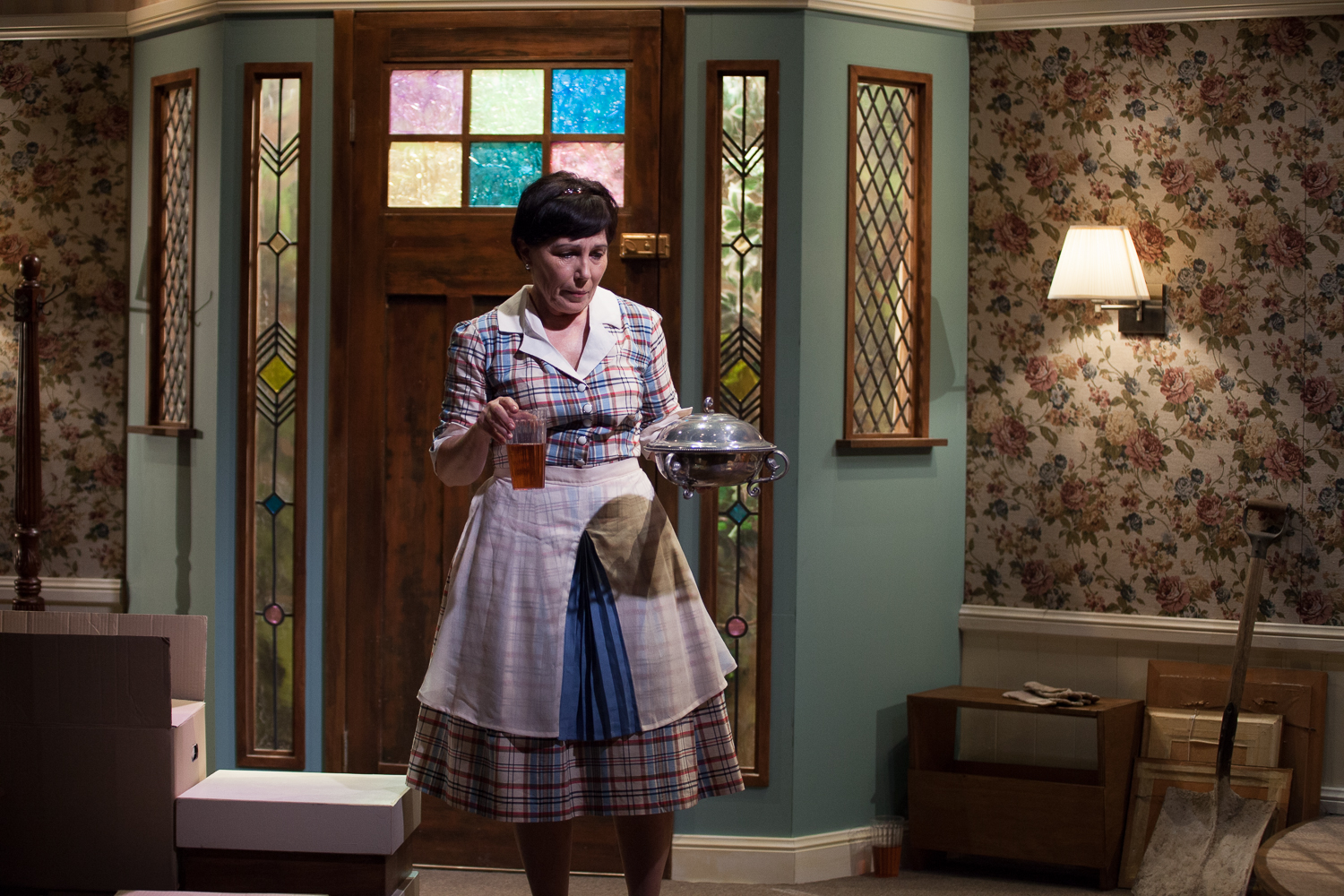
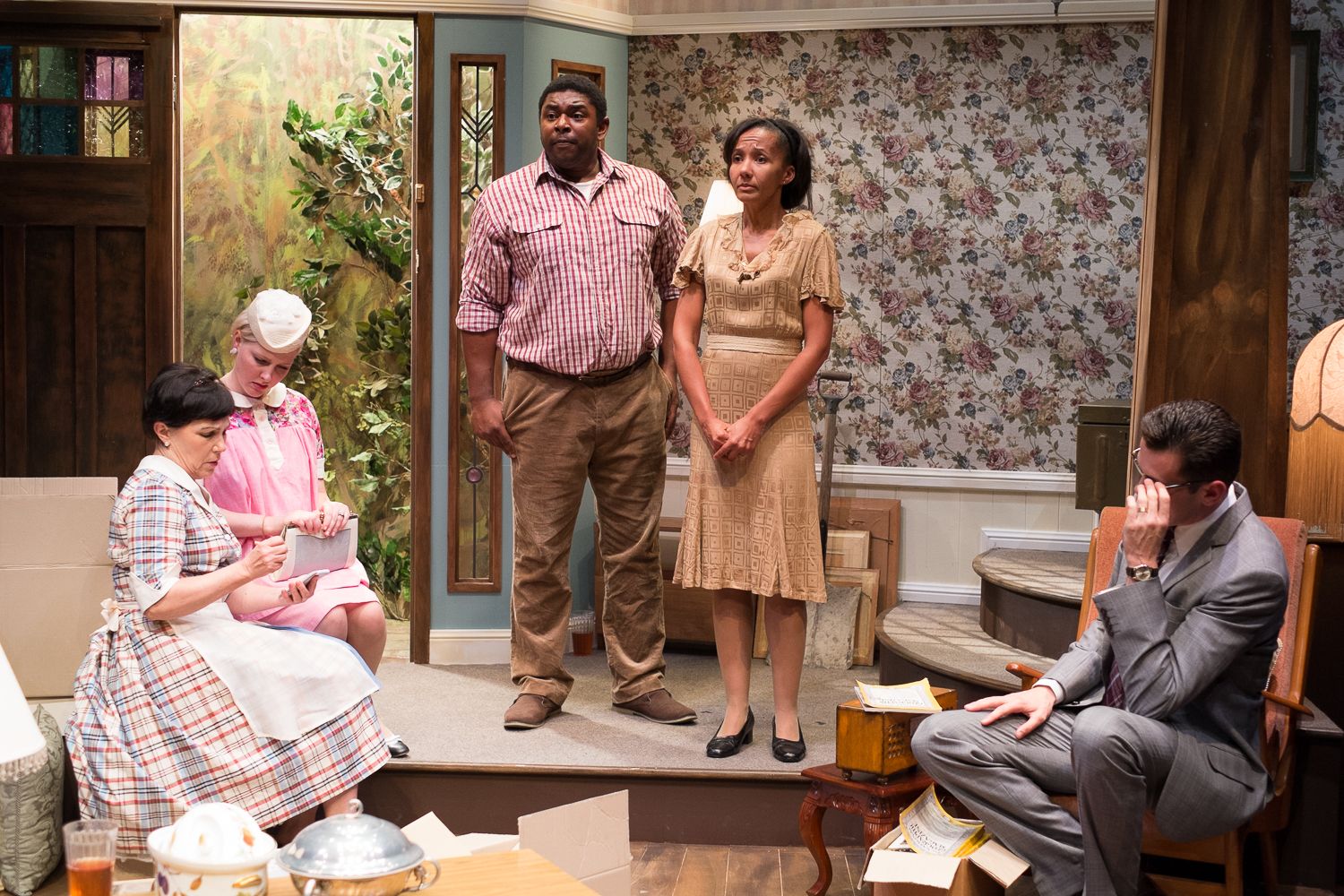
 You could forgive Wendy Strehlow for being hard to tie down for an interview. When I first contacted her, she was in the last week of rehearsals for the Australian staging of the Pulitzer prize-winning Clybourne Park. Her dual roles were Bev and Kathy, two women separated by 50 years but bound together by “race, real estate and the volatile values of each” (Playbill). The play sold out before it even opened at the Ensemble Theatre in Sydney. Wendy, however, was very accommodating.